
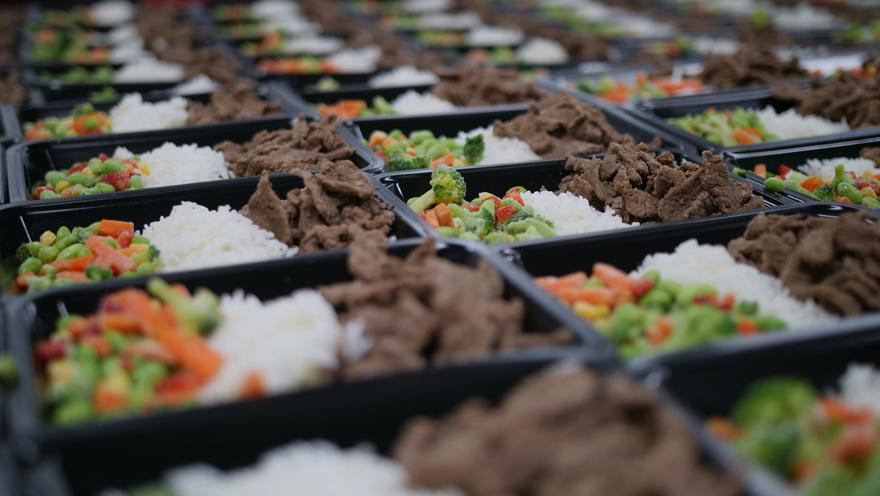
Maybe you meal prepped on Sunday. Maybe you didn't.
Maybe it's Wednesday and you cannot look at another container of reheated chicken and rice.
None of those situations mean you've failed at nutrition.
Keep three or four genuinely good emergency meals in the freezer.
That may be one of the most practical nutrition strategies you can use while taking a GLP-1 medication.
Meal prep can be helpful, but real life does not always cooperate. Work gets busy. Kids need attention. Travel happens. Plans change. Your appetite changes. And sometimes you simply do not want to eat the exact same meal three or four days in a row.
Convenience food can be part of the solution.
The key is learning how to find frozen and prepared meals that provide meaningful nutrition even when preparation takes only a few minutes.
Quick answer: When choosing a convenience meal on a GLP-1, a practical starting point is approximately 20 grams or more of protein and around 6–10 grams of fiber when that amount is comfortable for you. These are useful shopping criteria—not universal medical requirements. Also consider portion size, vegetables or legumes, sodium, saturated fat, ingredients, and your individual gastrointestinal tolerance.
Why Protein and Fiber Matter When You Are Taking a GLP-1
GLP-1 medications can reduce appetite, increase feelings of fullness, and change how much food feels comfortable at one time.
That can make eating less happen almost automatically. But eating less also means you have fewer opportunities throughout the day to get enough protein, fiber, vitamins, minerals, essential fats, and other nutrients.
The 2025 multidisciplinary GLP-1 nutrition advisory emphasizes nutrient-dense eating patterns, adequate protein, fruits, vegetables, whole grains, legumes, and individualized nutrition support for people using GLP-1 medications.
Protein deserves particular attention because weight loss can include both fat and lean tissue. When appetite becomes smaller, choosing foods that provide meaningful protein within a manageable portion becomes increasingly useful.
Fiber matters too. Fruits, vegetables, beans, lentils, whole grains, nuts, and seeds can contribute fiber along with vitamins, minerals, and other beneficial compounds.
But there is an important GLP-1 caveat:
More fiber is not automatically better if your digestive system is struggling.
Dot’s Note
The 6–10 gram fiber range in this article is a practical shopping screen, not a requirement that every person needs to hit at every meal. If you are dealing with nausea, bloating, constipation, reflux, very low appetite, or a recent medication dose increase, a lower-fiber meal may sometimes feel more comfortable. Increase fiber gradually and adjust based on your individual tolerance.
For a deeper explanation of fiber targets and digestive tolerance, read our full guide to fiber on GLP-1 medications.
The Seagulls Convenience Meal Test
You do not need to analyze every frozen dinner like a nutrition scientist.
For this guide, we used a simple framework to identify meals that could make useful freezer or refrigerator backups.
| What We Look For | Practical Target | Why It Matters |
|---|---|---|
| Protein | About 20 g+ | Helps a smaller meal make a meaningful contribution toward overall protein intake. |
| Fiber | About 6–10 g | Provides meaningful fiber without necessarily requiring a large portion. Individual tolerance matters. |
| Food quality | Look beyond the macros | Vegetables, beans, lentils, whole grains, and other nutrient-dense ingredients add more than protein and fiber numbers alone. |
| Portion | Enough to function as a meal for you | Some convenience meals are relatively small and may need an easy addition. |
| Sodium | Check the full label | Prepared meals can contain substantial sodium, which is particularly important if you have an individualized sodium limit. |
| Enjoyment | Something you actually want to eat | A nutritionally impressive frozen meal is not very useful if you keep avoiding it. |
These targets are intended as practical shopping criteria rather than individualized nutrition prescriptions.
High-Protein, High-Fiber Frozen Meals for GLP-1 Users
The frozen aisle has changed considerably. There are now meals that combine meaningful protein and fiber without requiring an hour of preparation—or another Sunday afternoon spent filling identical containers.
Here are some of the stronger options we found.
| Meal | Protein | Fiber | Format |
|---|---|---|---|
| Healthy Choice Spicy Black Bean & Chicken Protein Bowl | 20 g | 7 g* | Frozen bowl |
| Healthy Choice Basil Pesto Chicken Protein Bowl | 20 g | 7 g* | Frozen bowl |
| Healthy Choice Southwest-Style Chicken Burrito Bowl | 20 g | 6 g | Frozen bowl |
| Vital Pursuit Chicken, Spinach & Artichoke Sandwich Melt | 24 g | 6 g | Frozen sandwich |
| Vital Pursuit Max Pro Chicken & Spinach Garlic Alfredo | 31 g | 12 g | Frozen bowl |
| Vital Pursuit Max Pro Uncured Pepperoni Pizza | 33 g | 15 g | Frozen pizza |
| Mosaic Orange Tofu Stir Fry | 22 g | 7 g* | Frozen plant-based bowl |
| Mosaic Yaki Udon Bowl | 20 g | 8 g | Frozen plant-based bowl |
| Mosaic Indian "Butter" Tofu | 20 g | 6 g | Frozen plant-based bowl |
Nutrition information was reviewed in August 2026. Product formulations can change. Values marked with an asterisk should be confirmed on the current package because the manufacturer's public product page does not display the complete Nutrition Facts panel directly in page text.
Healthy Choice: Easy Grocery-Store Freezer Options
Spicy Black Bean & Chicken Protein Bowl
Approximately 20 g protein + 7 g fiber
This bowl combines pulled chicken breast with black beans, vegetables, riced cauliflower, chili sauce, and Cotija cheese.
The combination of chicken and beans is useful because you are getting a primary protein source along with a fiber-containing legume in the same container.
Healthy Choice currently confirms 20 grams of protein for the bowl.
View Healthy Choice Spicy Black Bean & Chicken.
Basil Pesto Chicken Protein Bowl
Approximately 20 g protein + 7 g fiber
This grain-free bowl combines chicken with white kidney beans, vegetables, riced cauliflower, and basil pesto.
It is another example of a meal that gets more nutritional mileage from including legumes and vegetables rather than relying exclusively on meat plus refined starch.
View Healthy Choice Basil Pesto Chicken.
Southwest-Style Chicken Burrito Bowl
20 g protein + 6 g fiber
This bowl combines chicken, vegetables, whole-grain brown rice, Cotija cheese, and enchilada sauce.
Healthy Choice currently identifies it as containing 20 grams of protein and 6 grams of fiber, putting it almost exactly at the minimum screening criteria we used for this article.
View Healthy Choice Southwest-Style Chicken Burrito Bowl.
Vital Pursuit: More Variety Than Another Frozen Bowl
Vital Pursuit is a Nestlé brand that markets several of its foods toward people using weight-management medications, including GLP-1 medications.
That does not automatically make every Vital Pursuit product appropriate for every GLP-1 user.
It does make the line interesting to evaluate.
Chicken, Spinach & Artichoke Sandwich Melt
Approximately 24 g protein + 6 g fiber
This sandwich combines grilled chicken, spinach, artichokes, roasted red peppers, mozzarella, and multigrain bread.
One thing I particularly like about this option is simple:
It is not another bowl.
If food boredom is one reason meal prep starts falling apart by Wednesday or Thursday, changing the format of the meal can help.
View Vital Pursuit Chicken, Spinach & Artichoke Sandwich Melt.
Max Pro Chicken & Spinach Garlic Alfredo
31 g protein + 12 g fiber
This frozen pasta bowl provides considerably more protein and fiber than a traditional frozen Alfredo meal.
Vital Pursuit currently lists 31 grams of protein, 12 grams of fiber, and 460 calories per package.
But 12 grams of fiber in one meal may be more than some people comfortably tolerate, particularly during periods of nausea, bloating, constipation, early fullness, or medication dose adjustment.
The largest fiber number on the package is not automatically the best choice for your stomach.
View Vital Pursuit Max Pro Chicken & Spinach Garlic Alfredo.
Max Pro Uncured Pepperoni Pizza
33 g protein + 15 g fiber
Yes, a frozen pizza can technically qualify as both high protein and high fiber.
Vital Pursuit currently lists 33 grams of protein and 15 grams of fiber per pizza.
That does not automatically make it nutritionally superior to every frozen bowl.
The pizza also contains 800 milligrams of sodium and 4.5 grams of saturated fat, and 15 grams of fiber in one sitting may feel like a lot for someone already dealing with GI symptoms.
The value here is choice. If you tolerate it well and are completely tired of bowls, a pizza format may make the freezer backup plan feel much less repetitive.
View Vital Pursuit Max Pro Uncured Pepperoni Pizza.
Seagulls Takeaway
We are not ranking a 15-gram-fiber pizza above a 6-gram-fiber bowl simply because the number is larger. Nutrition is not a scoreboard. The better meal is the one that fits your nutritional needs, appetite, medical circumstances, preferences, and digestive tolerance.
Mosaic: Plant-Based High-Protein, High-Fiber Frozen Meals
One frustration with many high-protein convenience-food lists is that nearly every recommendation eventually turns into chicken.
If you eat vegetarian meals—or simply want more variety—Mosaic has several plant-based frozen bowls that still provide meaningful protein and fiber.
Orange Tofu Stir Fry
Approximately 22 g protein + 7 g fiber
This bowl combines tofu, quinoa, brown rice, edamame, broccoli, peppers, almonds, and sesame.
It is a useful example of how tofu, edamame, whole grains, nuts, and vegetables can work together to create a plant-based meal with more than 20 grams of protein.
View Mosaic Orange Tofu Stir Fry.
Yaki Udon Bowl
20 g protein + 8 g fiber
This vegan bowl uses seitan as its primary protein source and combines it with udon noodles and vegetables.
Mosaic currently lists 20 grams of protein and 8 grams of fiber per bowl.
At those numbers, it falls almost perfectly within the shopping range we used for this guide.
Indian "Butter" Tofu
20 g protein + 6 g fiber
This plant-based meal combines tofu, spinach, basmati rice, nuts, tomatoes, dates, raisins, and spices.
Mosaic currently lists 20 grams of protein and 6 grams of fiber per bowl.
More importantly for this article, it gives you a completely different flavor profile from the typical frozen diet meal.
That variety matters.
If having different foods available keeps you from becoming completely burned out on meal prep, variety is serving a practical nutritional purpose.
View Mosaic Indian "Butter" Tofu.
Fresh Prepared Meals Can Supplement Meal Prep Too
Your backup plan does not have to live entirely in the freezer.
Fresh prepared meal delivery can be useful if your biggest barrier is time rather than access to groceries.
The tradeoff is usually price. Prepared delivery generally costs more than a grocery-store frozen meal, but you are also paying for preparation, delivery, and additional menu variety.
For someone who routinely replaces an unplanned dinner with restaurant delivery—or skips eating because there is nothing ready—the calculation may look different.
Factor GLP-1 Balance Meals
Factor currently offers a GLP-1 Balance meal preference.
The company states that qualifying meals provide at least 25 grams of protein and 6 grams or more of fiber.
The meals arrive refrigerated rather than frozen and are designed to be reheated quickly.
This can be useful for someone who likes the convenience of meal prep but does not necessarily want to eat the same batch-cooked meal several days in a row.
Explore Factor's GLP-1 meal options.
What Does "GLP-1 Friendly" Actually Mean on a Food Label?
You are going to see the phrase "GLP-1 friendly" more frequently in grocery stores.
Do not treat it like a medical certification.
There is not currently one standardized nutrition definition requiring every food marketed as "GLP-1 friendly" to contain the same amount of protein, fiber, calories, sodium, or any other nutrient.
That means two foods using similar marketing language can have very different Nutrition Facts panels.
Instead of trusting the front of the package alone, turn it around.
Ask:
- How much protein is in the entire meal?
- How much fiber?
- Where are those nutrients coming from?
- Does the meal contain vegetables, beans, lentils, whole grains, or other nutrient-dense foods?
- How much sodium and saturated fat does it contain?
- Is the serving enough food for me today?
- Does this type of food usually feel comfortable with my medication?
The front of the package is marketing. The back of the package gives you the numbers.
What If a Frozen Meal Almost Meets the Target?
You do not need to reject a meal because it contains 18 grams of protein instead of 20, or 5 grams of fiber instead of 6.
Sometimes the easiest strategy is simply to upgrade it.
If the Meal Needs More Protein
- Add a small amount of cooked chicken or turkey
- Add edamame
- Add tofu
- Pair it with Greek yogurt or cottage cheese when that fits the meal
- Add tuna or salmon to a compatible bowl
- Use a small protein shake alongside the meal if solid food is difficult to tolerate
If the Meal Needs More Fiber
- Add a small portion of frozen broccoli or another cooked vegetable
- Add black beans, chickpeas, or lentils
- Pair the meal with berries or kiwi
- Add avocado when it works with the meal
- Choose a whole-grain side
The goal is not to turn a frozen entrée into an enormous meal.
For many people taking GLP-1 medications, a large portion may be uncomfortable. Use additions strategically according to your appetite and digestive tolerance.
What About Sodium in Frozen Meals?
Prepared and frozen meals can contain more sodium than many meals cooked from basic ingredients at home.
That does not automatically make every frozen dinner a poor choice.
Look at sodium in the context of the entire meal, your overall eating pattern, and your individual medical needs.
If you have high blood pressure, kidney disease, heart disease, fluid restrictions, or have been instructed to follow a specific sodium limit, follow individualized guidance from your healthcare professional or registered dietitian.
Otherwise, sodium is one more part of the Nutrition Facts panel to consider rather than a reason to automatically reject all convenience foods.
Your Freezer Is Part of Your Meal Plan
There is a version of healthy eating on social media where the refrigerator is always organized, vegetables are already chopped, chicken is freshly grilled, overnight oats are lined up in matching glass containers, and Sunday afternoon is permanently reserved for meal prep.
Real life is usually messier than that.
Some weeks you will cook.
Some weeks you will assemble food.
Some weeks you will microwave it.
All three can be part of a sustainable nutrition strategy.
If you have the time and desire to meal prep, great.
If you prepare enough food for two days instead of seven, that counts too.
If Wednesday arrives and the thought of eating the same chicken bowl one more time makes you want to order takeout, having something completely different waiting in the freezer may be exactly what helps you eat something nourishing instead.
Convenience is not the opposite of healthy eating.
Used intentionally, convenience can make healthy eating more realistic.
A Simple Seagulls Freezer Backup Plan
You do not need to fill your freezer with 30 "diet meals."
Start with three or four.
- Choose different flavor profiles. If boredom is already the problem, do not buy four versions of basically the same chicken bowl.
- Look for meaningful protein. Approximately 20 grams or more is a useful screening point for this type of meal.
- Look for fiber you tolerate. Around 6 grams or more can be useful, but digestive comfort matters.
- Keep one gentler option available. Appetite and GI tolerance can change from day to day.
- Keep easy upgrades nearby. Frozen vegetables, edamame, beans, yogurt, fruit, or another simple protein can fill a nutritional gap.
- Replace meals you genuinely enjoy. Stop repeatedly buying food you dislike simply because the package looks healthy.
That is your emergency plan.
Not because you failed to meal prep.
Because you planned for real life.
Nutrition Does Not Have to Be Perfect to Be Consistent
One frozen meal will not determine the quality of your diet.
Neither will one home-cooked meal.
What matters more is the pattern you can sustain.
GLP-1 medications may change appetite, cravings, portion size, digestion, and food preferences. A sustainable nutrition plan has to be flexible enough to change with you.
Sometimes that means cooking.
Sometimes it means leftovers.
Sometimes it means opening the freezer and having a solid option ready in five minutes.
If convenience makes it easier for you to consistently include protein, fiber-rich foods, greater food variety, and adequate nutrition instead of routinely skipping meals because cooking feels overwhelming, then convenience is doing its job.
Need Help Building Your GLP-1 Nutrition Plan?
Seagulls GLP-1 provides practical, dietitian-led education to help you navigate food, protein, fiber, meal planning, digestive side effects, movement, and sustainable nutrition while taking a GLP-1.
GLP-1 Frozen Meals FAQ
Frequently Asked Questions
Straightforward answers about frozen meals, protein, fiber, sodium, meal prep, and foods marketed as GLP-1 friendly.

Dot
Medical Disclaimer
This article is for educational purposes only and is not a substitute for individualized medical care or medical nutrition therapy. Nutrition needs and food tolerance vary by person. Speak with your prescribing clinician or registered dietitian before making significant dietary changes if you have ongoing gastrointestinal symptoms, kidney disease, heart disease, diabetes, food allergies, a prescribed sodium or fluid restriction, or another medical condition affecting nutrition. Contact your healthcare provider promptly for severe or worsening symptoms.
Product Information
Nutrition information was reviewed in August 2026 using manufacturer information available at the time of publication. Recipes, serving sizes, ingredients, nutrition facts, allergens, pricing, and availability can change. Always review the current Nutrition Facts panel, ingredient list, and allergen statement on the product you purchase. Mention of a commercial product is for educational purposes and does not mean that the product is appropriate for every individual. Seagulls GLP-1 was not compensated by the brands listed in this article unless separately disclosed.
Sources and Further Reading
- Mozaffarian D, et al. Nutritional Priorities to Support GLP-1 Therapy for Obesity: A Joint Advisory. Obesity. 2025.
- Healthy Choice. Protein Bowls and product nutrition information. Accessed August 2026.
- Healthy Choice. Southwest-Style Chicken Burrito Bowl. Accessed August 2026.
- Vital Pursuit. Max Pro Chicken & Spinach Garlic Alfredo Bowl. Accessed August 2026.
- Vital Pursuit. Max Pro Uncured Pepperoni Pizza. Accessed August 2026.
- Mosaic Foods. Orange Tofu Stir Fry. Accessed August 2026.
- Mosaic Foods. Yaki Udon Bowl. Accessed August 2026.
- Mosaic Foods. Indian "Butter" Tofu. Accessed August 2026.
- Factor. GLP-1 Balance Meal Delivery. Accessed August 2026.

Comments
Practical nutrition, meal planning, strength, and lifestyle ideas for your GLP-1 journey.
No comments yet. You can still be first!